
 Canada
Canada CRE News In Your Inbox.
Sign up for Connect emails to stay informed with CRE stories that are 150 words or less.

What Renters Value: Generational Differences Among Canadian Renters
(This guest column by Wendy Waters, a widely followed research specialist, provides insights on how renters’ living preferences differ according to age.)
By Wendy Waters, Real Estate Research Specialist
Baby Boomers and Gen Z renters can have different priorities when searching for a rental home. For owners and operators, understanding cross-generational renter preferences can help to attract and retain the appropriate renters for a given building.
While most properties can appeal to a wide range of ages, key data from the 2025 simplydbs Canadian Multi-Residential Survey (“CMRS”) highlights the similarities and differences between the priorities of the large Baby Boomer cohort (aged 65+) and those of emerging Gen Z renters .
Key findings: Across many categories, there is considerable overlap in preferences. For example, most renters, regardless of age, value Internet and cellular connectivity throughout the building, as well as parking availability.
The modest (but relevant) differences came in shared spaces and the human touch.
In response to dozens of questions about preferences, residents over 50 tended to be more focused on their personal space. They expressed the strongest desire for their own balcony and were less interested in shared outdoor spaces. By contrast, the 25-29 group — although they also want personal balconies — was more likely to value a resident lounge, rooftop deck, and similar shared social spaces. They were also more open to forgoing a private balcony in a building with great shared outdoor amenities. When doing leasing tours, showing older generations the suite first may be the right approach, and for younger generations, go to the shared amenities.
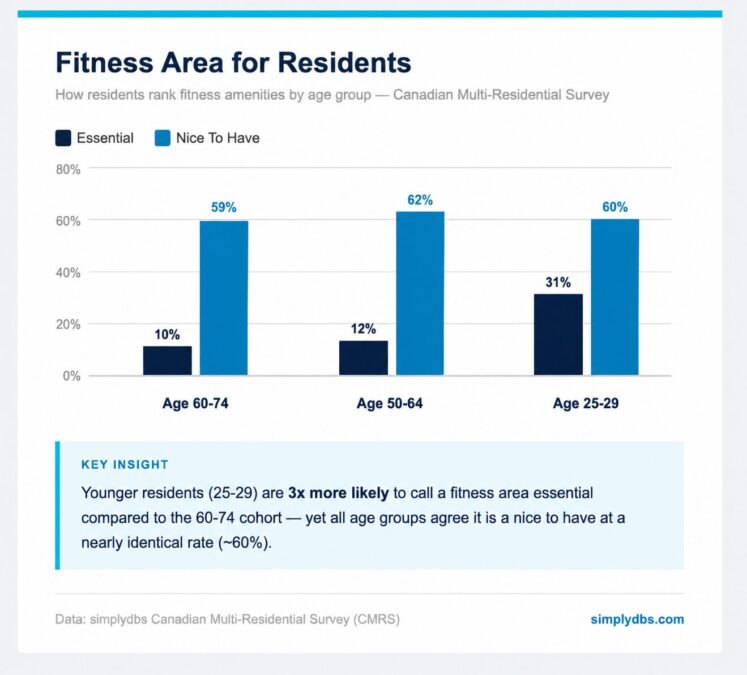
All renters generally viewed fitness centres as something “nice to have.” However, over 30% of 25-29 year olds considered it essential–they would not rent without this amenity. By contrast, only 10% of residents over 50 felt the same. For buildings without fitness, a slightly-older demographic may be worth targeting.
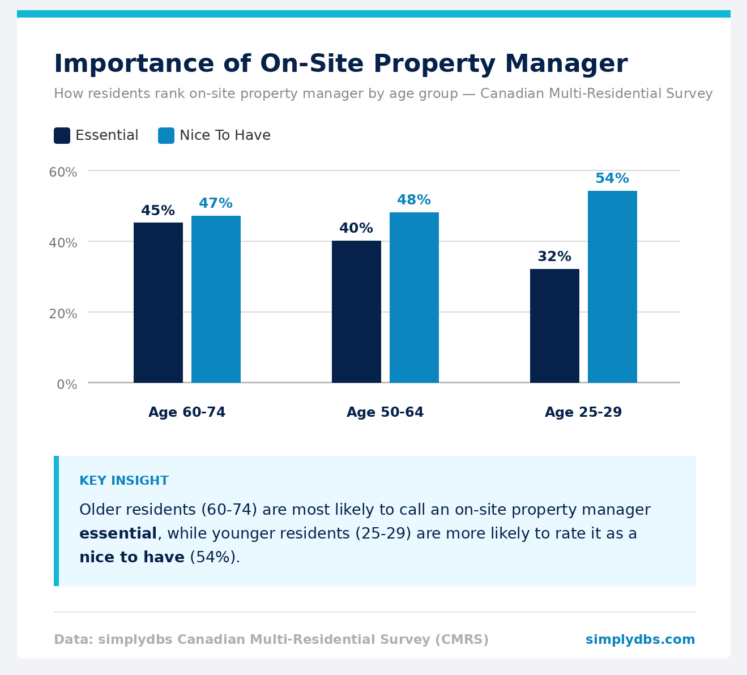
The desire for a high-touch, human-centric service model was most pronounced in the 50+ cohort, particularly the 60–74 age bracket, where an on-site property manager was highly valued. Across all generations, few wanted to interact with property management through chatbots.
One caveat: Because there is considerable overlap among the preferences of different generations, marketing specialists will want to be aware of these differences but also ask questions to confirm their prospect reflects generational trends. Active people, regardless of age, may appreciate the gym while introverts of all generations may place higher value on their personal spaces.
For more information on simplydbs and the Canadian Multi-Residential Survey, rebranded for 2026 as Rental Housing Study, visit simplydbs.com.
(Wendy Waters is an independent research analyst based in Vancouver, specializing in the rental-housing sector. From 2006 until 2025, she led the research services and strategy team at GWL Realty Advisors, providing unique analysis and proprietary research to support GWLRA and its clients’ Canadian and global real estate goals. She also spent five years leading Avison Young’s research efforts in Vancouver. Waters is a widely followed commercial real estate research expert. She volunteers with the Urban Land Institute’s B.C. chapter and previously co-chaired Realpac’s research committee.)
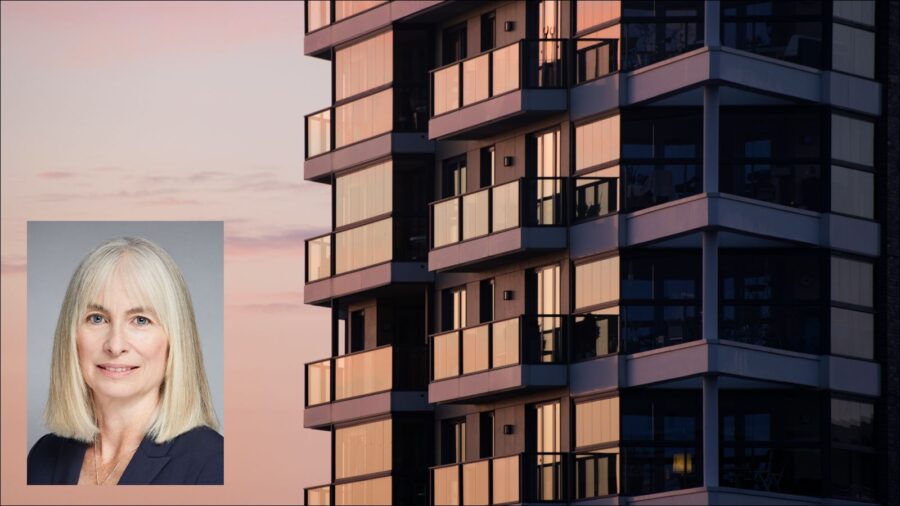
(Pictured: (Inset) Wendy Waters, Canadian apartment building.)
(Photos: Courtesy of simplydbs/Wendy Waters)
- ◦Lease
- ◦Development