
 Alberta & Prairies
Canada CRE News In Your Inbox.
Sign up for Connect emails to stay informed with CRE stories that are 150 words or less.
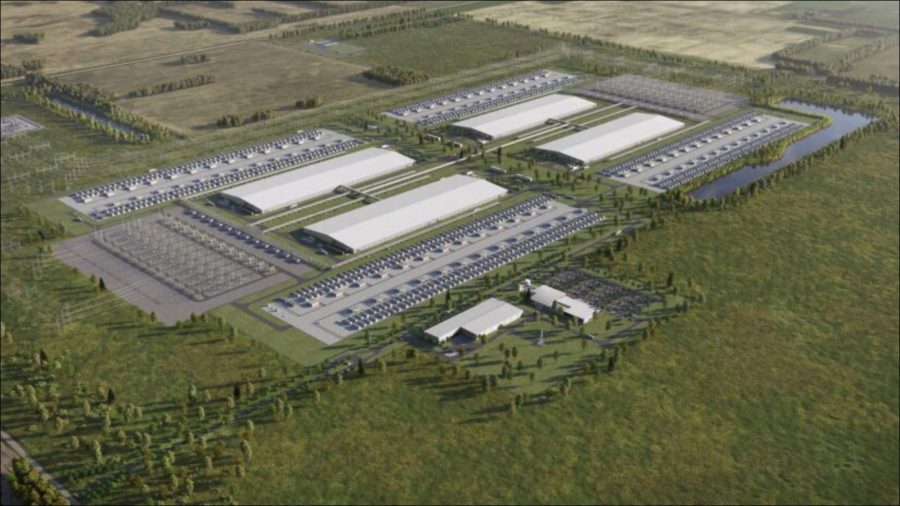

Meta Plans to Develop $13B Data Centre in Alberta’s Sturgeon County
Meta Platforms has announced plans to develop a $13-billion AI-optimized data centre north of Edmonton in Sturgeon County, marking the company’s first data-centre project in Canada.
The proposed one-gigawatt facility is expected to support approximately 3,000 construction workers at peak construction and create more than 300 permanent operational jobs once completed, said Meta. The company also plans to invest about $60 million in local infrastructure improvements, including roads and water infrastructure, while launching its annual Data Center Community Action Grants program to support local non-profit organizations.
“Sturgeon County is the perfect home for Meta for several reasons, including its strong access to infrastructure and energy, talented workforce, and outstanding community partners,” said Gary Demasi, the firm’s vice-president of data centre strategy and development. “We look forward to creating jobs, partnering with community and government leaders, and driving positive impact for years to come.”
Alberta Premier Danielle Smith said the province is ensuring that the province leads rather than follows as AI transforms the global economy.
“We created the right conditions to attract world-leading investments while protecting the interests of Albertans,” she said. “This project will create thousands of jobs, generate hundreds of millions of dollars in annual revenue, and make electricity more reliable and affordable.”
Meta said it worked with Pembina Pipeline Corporation subsidiary Greenlight Limited Partnership, AltaLink, Capital Power and the Alberta Electric System Operator (AESO) to plan the project’s electricity requirements.
Pembina, Morgan Stanley Infrastructure and Kineticor announced last week that they will partner on a $4.6-billion, 970-megawatt, natural-gas-fired power plant in Sturgeon County to serve a new data-centre development project. But the firms did not disclose the identity of the proposed data centre’s operator.
Pembina Pipeline participated in a news conference Wednesday in Calgary, where the data-centre project was announced and congratulated Meta and the provincial on the occasion.
“Dedicated, contracted gas-to-power infrastructure represents a promising new growth platform, and we are proud of the role Greenlight is playing in supporting this exciting new industry,” said Scott Burrows, Pembina’s president and CEO. “Further, gas-to-power for data centres will catalyze new natural-gas demand supporting higher production of Western Canadian hydrocarbons, which will provide additional benefits to our customers, the province of Alberta, and Pembina.”
Capital Power announced Wednesday that it has entered into a long-term (greater than 10 years) energy supply agreement (ESA) with Meta for 250 megawatts. The load from the project is expected to be in place in the second half of 2028.
Capital Power said the deal enhances the firm’s contracted profile; is designed to provide stable, long-term contracted cash flows; and will demonstrate Alberta’s ability to attract large-scale investment in digital infrastructure will also supporting long-term economic growth.
“This agreement is exactly the kind of opportunity we’ve been preparing for – AI infrastructure will be built where power is available, reliable and scalable and, with the support of Capital Power’s fleet, Alberta meets the mark, said Avik Dey, Capital Power’s president and CEO. “At Capital Power we are ready to serve customers’ growing demand for 24/7 power while creating long-term value for our shareholders. Our Alberta fleet is built for this. We have the dependable, dispatchable generation and operational expertise needed to power large-scale infrastructure projects like Meta’s new data centre.”
The project will be developed under Alberta’s bring-your-own power approach, said Sturgeon County’s local government. The province has agreed to fast-track approvals of data centres that supply their own power sources, reducing pressure on the provincial grid.
AESO has determined that 1.2GW could be allocated for data-centre projects without compromising the grid’s reliability and stability.
Meta said it will fully fund the new power generation and grid infrastructure needed for the facility and that the data centre’s electricity consumption will be matched with 100% clean and renewable energy.
The company also said the facility will use a closed-loop, liquid-cooled system with dry cooling that will require no operational water use for cooling. Water consumption at the site will be limited to domestic uses, fire protection and equipment maintenance, according to Meta.
“We’re excited to call Sturgeon County home for our newest data center, and look forward to working with and contributing positively to the local community.”
Invest Alberta acting CEO Keith Bradley said the provincial economic-development agency worked with Meta in recent years to bring the project to fruition.
“The success of this investment is a direct result of strong provincial ecosystem collaboration, and an excellent value proposition,” said Bradley.
But the Pembina Institute, a think tank that advocates for strong, effective policies that will support Canada’s clean-energy transition, criticized the decision to power the project partly with a combination of the planned new natural-gas plant and the provincial grid.
David Pickup, director of the institute’s electricity program, said the proposed project “serves as yet another example of how Alberta’s current policy and market framework is being designed to structurally lock in demand for natural gas above all other options – even if it means higher and more volatile costs for consumers.”
He added that Meta and the Alberta government could have announced cheaper, low-carbon solutions that would not expose consumers to higher and more volatile energy rates.
“It doesn’t have to be this way,” he said. “Already, other jurisdictions and operators have chosen a different path: to power these operations with renewables first and foremost. Alberta and Meta have alternatively agreed to lock in gas and build renewables later.”
A news release announcing the project states that it will reduce Albertans’ electricity-transmission costs by bringing its own power.
Upon completion, the proposed Sturgeon County project would be the 33rd in Meta’s global network.
Menlo, Calif.-based Meta develops social media platforms, messaging services, wearable technologies and artificial intelligence products used by billions of people worldwide. The global tech giant’s holdings include Facebook and Instagram.
Pictured: Future Meta AI-optimized data centre in Alberta’s Sturgeon County.
Rendering: Meta
- ◦Development
- ◦Economy
- ◦Policy/Gov't