
 Canada
Canada CRE News In Your Inbox.
Sign up for Connect emails to stay informed with CRE stories that are 150 words or less.


Carney Urged to Fight Planned New 50% U.S. Tariffs
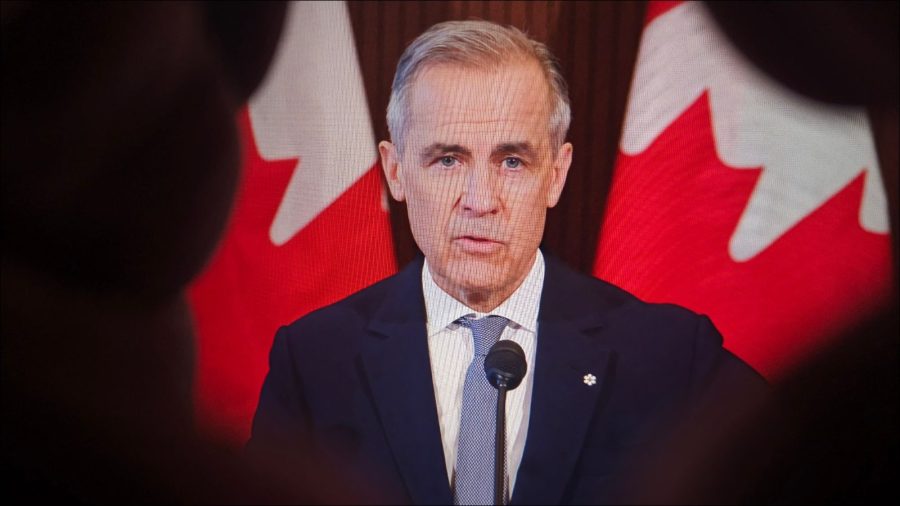
Canadian Manufacturers & Exporters and premiers are calling for Prime Minister Mark Carney to fight back against planned new U.S. 50% tariffs on almost US$20 billion worth of Canadian goods.
If the tariffs are implemented, they would have widespread commercial real estate implications ranging from automobile manufacturing to multi-residential construction.
U.S President Donald Trump’s planned move comes at Canada is seeking to reduce tariffs and negotiate a new free-trade deal with the U.S. following the American government’s decision not to renew the Canadian-U.S.-Mexico Agreement that allows for free trade of specific goods.
“[Monday’s] announcement of an additional 50% tariff on most Canadian goods effective August 19, including products that comply with CUSMA, is an alarming escalation that will inflict serious damage on manufacturers, workers and consumers on both sides of the border,” said Dennis Darby, president and CEO of Canadian Manufacturers & Exporters. “These tariffs will raise costs, disrupt production, and make North America less competitive at a time when we should be strengthening our shared industrial base.”
The tariffs were announced late Monday and are scheduled to take effect Aug. 19. Trump intends to invoke Section 338 of the U.S. Tariff Act of 1930, a provision that has never before been used. Unlike previous measures, the new duties will not exempt goods traded under the CUSMA, expanding their impact on Canadian exports. The U.S. Trade Representative’s office said the measures will apply to nearly US$20 billion in Canadian goods, representing about 5% of Canada’s exports to the United States.
“We implore the federal government to engage immediately with the U.S. administration to have these tariffs withdrawn before they take effect,” said Darby. “We stand ready to support their efforts as they work with industry and the provinces to assess the impacts, provide clear guidance to affected businesses, and offer targeted support where it is needed most.”
The White House said the tariffs are a response to Canada’s retaliatory measures against earlier U.S. tariffs on steel, aluminum and automobiles. Additional duties specifically target Canadian beer, wine, whisky and dairy products, while hundreds of other items — including cement, hockey sticks, cameras and Christmas ornaments — will also face the 50% levy. Canadian oil, natural gas, potash, fish and critical minerals are excluded.
Carney criticized the U.S. action Tuesday, saying: “This is the latest in a series of unilateral U.S. trade actions that began with the U.S. imposing a series of tariffs in direct violation of” the CUSMA. “Canada, as is its right, has merely matched those measures.” He added that Canada has already made “detailed and comprehensive proposals” to end the trade dispute and is “ready to intensify” negotiations with the United States.
Later Tuesday, Carney told reporters in Ottawa that he and Trump have agreed to intensify trade talks.
The Trump administration also cited Canada’s supply-management system for dairy products and provincial restrictions on U.S. alcohol sales as reasons for the new measures, saying Canadian imports of U.S. alcohol have fallen sharply since several provinces removed American products from government liquor stores.
“The other shoe appears to have dropped,” after U.S. administrators voiced their displeasure with Canadian tariffs on imports of products that the U.S. is now targeting, wrote Andrew Hencic, a TD Bank director and senior economist in a research note.
Unlike U.S. Liberation Day tariffs that were gradually scaled back, the new ones are highly targeted, he said.
“Given the targeted nature of these tariffs, it suggests that products were selected where demand is going to be highly responsive to the new duties,” he wrote.
The new tariffs are likely to dent the confidence further of Canadian businesses that have been operating under a “cloud of uncertainty” for me than a year. A repeat of the large-scale 2025 confidence shock “remains a tall risk,” he added.
He believes that Canadian businesses are likely to price the new tariffs into their goods before the levies are implemented.
“Given the circumstances, should the tariffs be maintained it would likely take between 0.3 to 0.6 percentage points off GDP growth over the next year, absent any major changes to business behaviour or government response,” wrote Hencic. “We believe that the ultimate impact would likely track closer to the lower range of these estimates.”
As market responses remain muted thus far, expectations are unchanged on the Bank of Canada’s interest rates, he added.
“What is important is that the downside economic risks from trade the BoC has continually cited remain ever-present,” he wrote.
Brian Clow, a former advisor to former prime minister Justin Trudeau during the USMCA negotiations, described the move as “a big escalation” in an interview with The Globe and Mail.
“When a country produces such a list … you are doing it to maximize the economic and political pain in the country you are targeting,” he told the Globe.
“Things ‘could definitely get a lot worse.’ This is not necessarily the bottom.”
Lachlan Wolfers, global head of indirect taxes at KPMG International, told the Globe that the legal authority being used for the tariffs has never been tested in court.
“This basically follows a very familiar pattern of the U.S. administration,” Wolfers told his interviewer. “You set a clock ticking of 30 days, which is the strategy that is often deployed here. Create urgency as a means to try and get to a resolution.”
Ontario Premier Doug Ford called for an equivalent Canadian response, posting on social media: “If these tariffs proceed, Canada should respond tariff for tariff, dollar for dollar.”
B.C. Premier David Eby said the tariffs would ultimately hurt U.S. consumers.
“Mostly, it’s going to increase costs for Americans when they can least afford it,” Eby told reporters. “At this point, I just feel sorry for Americans. If you’re picking fights with Canadians, then you don’t have a friend in the world.”
TD’s Hencic noted that the new tariffs were announced as Section 122 tariffs are set to expire Friday. levies implemented as levies implemented under the U.S. International Emergency Economic Powers Act are due to expire Friday.
- ◦Financing
- ◦Policy/Gov't