
 Alberta & Prairies
Canada CRE News In Your Inbox.
Sign up for Connect emails to stay informed with CRE stories that are 150 words or less.
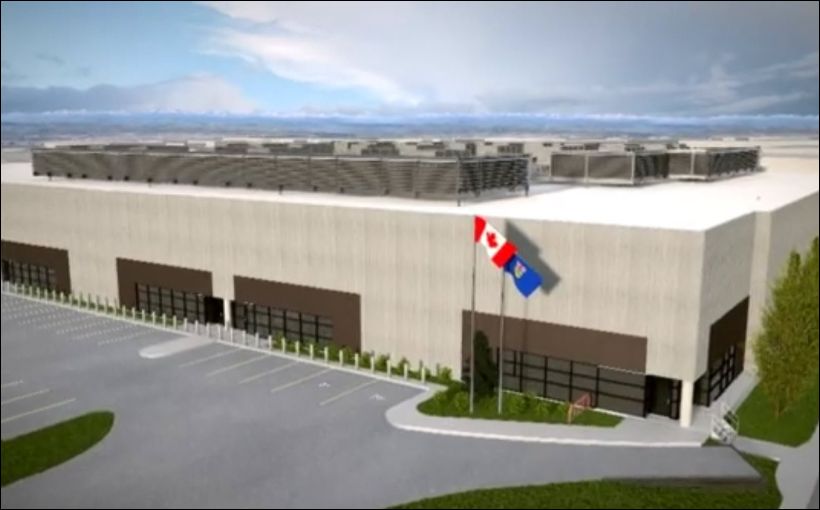

Alberta Government to Offer Incentives for Self-Powered Data Centres
The Alberta government has introduced legislation to incentivize self-powered AI data centres.
If it becomes law, Bill 8 would permit data-centre developers to provide their own power sources either through signed offtake agreements with power producers or their own electricity generated at future sites, Utilities Minister Nathan Neudorf told reporters.
In return, projects sourcing their own power would be eligible for fast-tracked approvals, provided that they secure environmental, regulatory and transmission permits before commencing production.
The proposed incentives are designed to reduce the strain on the provincial electrical grid and boost Alberta’s AI data-centre sector. The province aims to develop $100 billion worth of data centres over the next five years as part of a mandate that Premier Danielle Smith gave Neudorf earlier this year.
The incentives come after the Alberta Electric System Operator encouraged project proponents to bring their own power generation so their load does not travel through the transmission and distribution system. AESO’s latest update shows proponents are seeking to add nearly 20 gigawatts of load by 2031 but have proposed less than 5 gigawatts of new generation.
AESO has allocated all 1,200 megawatts of electricity available under its temporary cap for large-load projects to two proposed data centres near Edmonton.
TransAlta’s Keephills project received 230 megawatts, while 970 MW were assigned to a Pembina Pipeline proposal that could evolve into a major Meta AI data centre.
AESO introduced the interim limit in June in response to unprecedented electricity demand from planned hyperscale data centres, driven by rapid growth in generative AI and the computing needs of companies such as Microsoft, Amazon and Google. The operator says 37 additional data centre projects seeking grid connections are requesting 19.4 gigawatts of power—nearly 14 times the electricity required to run Edmonton.
Neudorf doubts that all of the proposed power projects will be completed, the Globe reported.
“If all of those projects were to go ahead, it would be like adding 20 cities the size of Calgary into our grid,” he told reporters. “I don’t think that’s possible, nor should it be necessarily our goal. We want to get the right ones to be the right fit within Alberta.”
Aaron Engen, AESO’s top executive, told reporters that existing power facilities can meet demand in the near term, but cannot serve all data-centre developers’ requests without risking without risking reliability.
Ryan Li, a University of Alberta electrical and computer engineering professor, has previously told CBC that data-centre development timelines outpace Alberta’s ability to build new grid infrastructure.
Alberta’s data-centre strategy aims to establish the province as the most attractive location in which to locate AI data centres.