
 Canada
Canada CRE News In Your Inbox.
Sign up for Connect emails to stay informed with CRE stories that are 150 words or less.

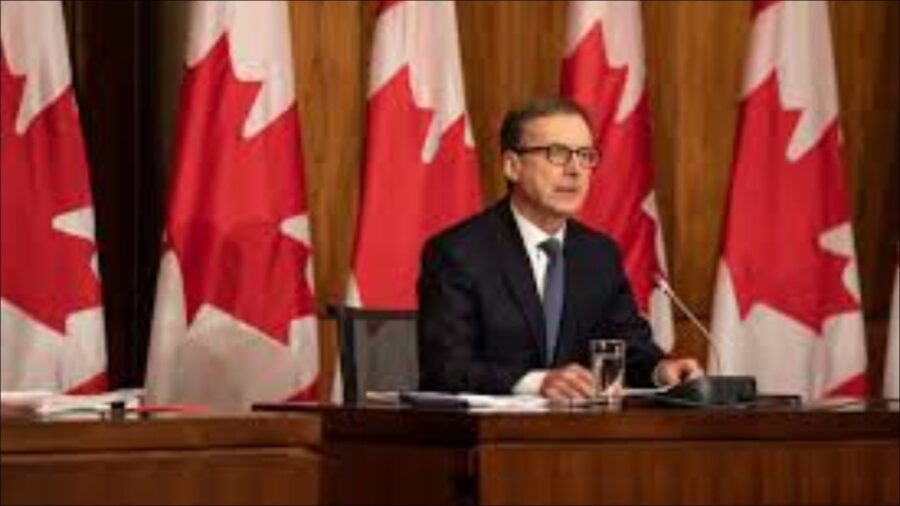

Analysts, CRE Executives Not Surprised by BoC’s Decision to Hold Key Interest Rate at 2.25%
Analysts and commercial real estate executives were not suprised by the Bank of Canada’s decision to keep its key overnight lending rate unchanged at 2.25% on Wednesday.
The decision marked the sixth straight time that the BoC has held its policy rate.
The central bank said the Canadian economy is showing signs of improvement, with growth picking up and inflation expected to ease gradually from its recent spike. But the BoC noted that there are still “important risks” associated with the war in the Middle East and U.S. trade policy.
Mario Lefebvre, chief economist at CoStar, told Connect that a change in monetary policy is not necessary right now. He said the Bank’s decision to hold its prime rate can be explained by the easing inflationary pressures and the pick-up in the economy.
“While people like to say that the Bank is staying on the sidelines, it is not really, as a policy rate of 2.25% is below the neutral rate (estimated at somewhere between 2.5% and 3%),” said Lefebvre. “Therefore, monetary policy remains a little stimulative, which is fine because the Canadian economy does not need a shot in the arm at this moment.”
He said the economy has picked up since spring amid a rebound in exports and housing activity. Furthermore, modest consumption growth continues, along with business non-residential investment.
“A declining population, ongoing U.S. tariffs and geopolitical tensions will limit growth, but the economy is still expected to post gains through the remainder of the year,” he said.
He noted that previous inflationary pressure has eased as the U.S.-Iran peace agreement has brought commodity prices down sharply. Also, core inflation, which excludes food and energy, is “well-behaved.”
“The ceasefire, however, is fragile, and developments must be closely monitored,” he said.
Michael Tsourounis, co-CEO and chief investment officer at Hazelview Investments, said it “wasn’t overly surprising” to see the Bank continue to hold its rate steady.
“There’s a lot of things [going on] right now globally in the economy,” he said in an interview with Connect. “We’ve yet to see what some of the longer-term impacts of that are going to be. There’s a conflict in the Middle East which is obviously playing into oil and energy markets. There’s trade relations [between] the U.S. in Canada. There’s still a lot of uncertainty around what that looks like over the longer period of time. So, there’s some economic headwinds.
“But at the same time, the Bank is closely monitoring, watching where inflation is. They are certainly balancing where that is.”
The BoC did as expected by holding its overnight lending rate, said TD Bank Economist Maria Solovieva in a research note.
“There were no surprises in today’s decision — the Bank of Canada’s message remains one of patience,” she wrote. “Compared with June, the Bank struck a modestly more optimistic tone on the economy. Economic activity has improved modestly following a weak first quarter, labour market conditions have been soft, and inflation pressures outside of energy remain well-contained.”
She expects the Bank to maintain its current stance for some time, although oil prices have increased again due to the conflict in the Middle East.
“If the repeated closures and reopenings of the Strait of Hormuz were not having such real economic consequences, they would rival the FIFA World Cup for drama,” she wrote. “The latest blockade has pushed oil prices roughly 10% higher, placing some upside risk to the BoC’s oil-price assumption underpinning their forecast.
“With the economy still operating below capacity, and core inflation remaining close to target, we continue to expect the Bank of Canada to remain on hold through the balance of the year.”
Jeremy Kronick, president of the C.D. Howe Institute and Steve Ambler, emeritus professor of economics at Université du Québec à Montréal, praised the BoC’s decision in a guest column published Wednesday in The Globe and Mail. Kronick and Ambler said the Bank maintained the hold when the instinct, based on inflation numbers, would have been to hike.
“Leaving the overnight rate target at 2.25% was the right call for the Bank, and if anything, we might need a cut before we see a hike,” Kronick and Ambler wrote.
But BoC Governor Tiff Macklem warned that the Bank could change its policy and introduce a hike if oil prices increase further.
“Clearly, if oil prices go higher, they stay higher, the likelihood that that gets passed on, broadens risks,” he told reporters during a news conference in Ottawa. “There’s a progression from broadening to persistence. And yes, if that happens, we may well need to raise interest rates. That’s not our base case, but it is a serious risk.”
He said the Bank will closely monitor the spreading of oil-price increases to prices of other goods.
Pictured: Bank of Canada Governor Tiff Macklem
Photo: Shutterstock
- ◦Financing
- ◦Economy
- ◦Policy/Gov't