
 Alberta & Prairies
Canada CRE News In Your Inbox.
Sign up for Connect emails to stay informed with CRE stories that are 150 words or less.
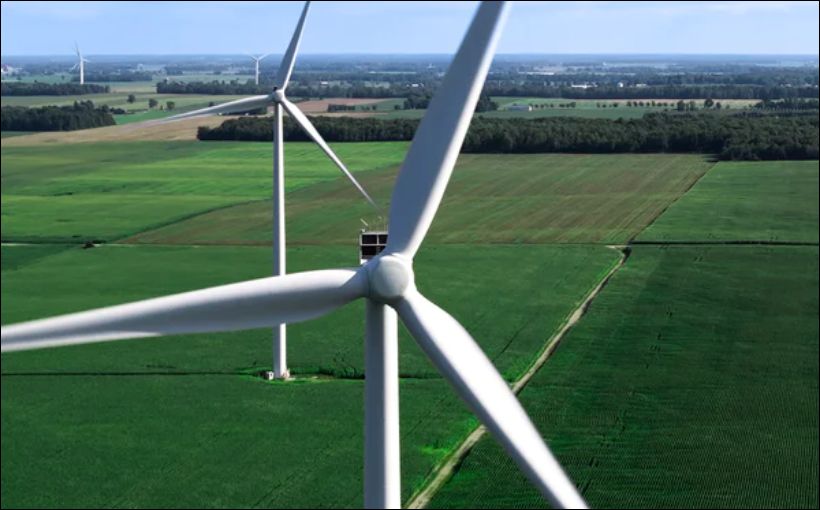

ATCO Blames Alberta Government for $408M Renewable-Energy Asset Value Writedown
ATCO is blaming Alberta government electricity reforms for a $408-million writedown on its renewable-energy assets in the province.
The Calgary-based company’s power subsidiary, Canadian Utilities, disclosed the after-tax devaluation — tied to roughly $1 billion in Alberta wind and solar holdings — in a recent financial filing, citing policy changes it says are “detrimental” to renewable energy investment.
The company pointed to transmission-system reforms that have curtailed output at its major wind project in southeast Alberta, along with pending regulatory changes expected to further impact performance and revenues.
A key issue is the province’s move away from its longstanding zero-congestion policy, which ensured new transmission capacity for power projects. The shift has led to grid congestion and forced production cutbacks, with ATCO’s Forty Mile wind farm among the hardest hit. According to the provincial Market Surveillance Administrator, 25% of the project’s potential generation was curtailed last year.
Canadian Utilities warned that future rules will prolong the issue, stating the project “remains exposed to sustained curtailment and uncertain timelines for relief, which will continue to depress cash flows until definitive transmission solutions are implemented.”
The company added that broader market restructuring — including pricing changes — is expected to further reduce revenues from its renewable portfolio.
All told, provincially legislated changes ‘have materially and retroactively altered the economic conditions under which these renewable assets were developed and financed,’” the company said.
The writedown includes $54 million tied to the company’s decision in the fourth quarter of 2025 not to proceed with certain development projects.
“The impairment reflects a disciplined reassessment under the current policy environment and does not assume policy reversals or mitigation measures,” said ATCO in the financial disclosure.
The company warned that it could take legal action to avoid a long-term impact on its operations. But Mark Brown, chief operating officer at ATCO EnPower told CBC that the company has filed any actions thus far.
“Our strong preference is to continue to work collaboratively with the Government of Alberta and the AESO [the Alberta Electric System Operator] on a fair and durable framework that serves customers, investors, and generators — as we have done throughout Alberta’s market redesign process,” said Brown in his statement to CBC.
The Alberta government pushed back on the criticism, noting that proposed transmission policies are not yet finalized.
“The policy changes that ATCO EnPower is referring to are not in effect and still in the draft stage,” spokesperson Ashli Barrett told CBC. “Further, the policy direction is based on the feedback and input gathered through hundreds of hours of extensive engagement with industry.”
The developments come amid broader criticism from the renewable-energy sector, which argues that recent provincial policies have slowed investment and development. A report from the Pembina Institute noted a 93% decline in new wind, solar and storage capacity installations between 2022 and 2025, CBC noted.
“Almost everywhere else, you build as much wind and solar as you possibly can, because they’re low cost, and then you design the system around them,” Tim Weis, the Pembina Institute’s senior director of industrial decarbonization, told CBC.
“Basically what [ATCO have] said in their investor report is what the renewable-energy industry has been saying for the past few years,” Weis told CBC. “I think we should expect more companies to be making decisions [like this] now.”
Photo: ATCO Enpower