
 B.C.
B.C.Canada CRE News In Your Inbox.
Sign up for Connect emails to stay informed with CRE stories that are 150 words or less.

B.C. Government to Offer $150M in Loan Guarantees to Landowners Affected by Cowichan Ruling
The B.C. government plans to offer about $150 million in loan guarantees to property owners and businesses affected by the controversial Cowichan Tribes court decision, Premier David Eby has told media outlets.
The decision established Aboriginal title alongside private land ownership in Cowichan Ancestral territory that includes Richmond, B.C.
Eby said in an interview with CBC that the province aims to ease financial uncertainty for homeowners and businesses by helping them access borrowing, refinance mortgages or secure financing. The guarantees would allow people to be “able to access borrowing, refinance their mortgages or mortgage a property if someone is buying new, or access financing as a business,” he told his CBC interviewer.
Eby told The Canadian Press that his government plans to offer $150 million in loan guarantees, including about $100 million in guaranteed financing for Montrose Properties, which owns roughly 120 hectares of the approximately 325-hectare claim area, and another $54 million for smaller landowners. The total could increase because current plans do not yet account for “additional commercial activity” in the area.
The issue stems from a legally unprecedented decision by B.C. Supreme Court Justice Barbara Young, who earlier this year recognized Aboriginal title alongside private property ownership on land that once housed a traditional Cowichan Nation village in what is now Richmond. While the ruling states that “the property rights of the private landowners are not undermined,” Young said the Crown must work with the Cowichan “negotiate and reconcile” the coexistence of Aboriginal title and private property rights, CBC noted.
The federal Crown, the province and the City of Richmond are appealing the decision. Part of the ruling has been suspended for 18 months to give the parties time to address its impacts. Meanwhile, Montrose Properties is seeking to have the B.C. Supreme Court reopen the decision.
Eby told CBC that provincial staff have gone door to door in the affected area to ask residents whether they have been unable to renew mortgages or secure loans because of the ruling. While there are no confirmed cases involving homeowners, he told CBC that many residents fear they will not be able to sell or refinance their homes.
Montrose Properties has said in legal filings that a previous lender denied it $35 million in financing due to concerns about the ruling, while talks on another project have stalled.
Richmond Mayor Malcolm Brodie has welcomed the planned guarantees.
“As one of many private landowners surprised by the impact of a case that we were not even party to, we have no choice but to take this step,” Ken Low, president and CEO of Montrose, said previously while referring to the Cowichan decision. “Because the final order has not yet been entered, we believe the court has both the ability and the responsibility to let us be heard before any final orders are made that affect us.”
Montrose wants to avoid having to await the outcome of a lengthy appeal process.
The court’s decision recognized Aboriginal title for the Cowichan, who are based on Vancouver Island but operated a fishing village on the south arm of the Fraser River during the 1800s in an area that is now part of Richmond.
Brodie has warned that the ruling could negatively affect property title in the city and other parts of southwestern. City officials came under intense criticism during a townhall meeting for not keeping property owners informed about the case.
The city is also facing a backlash from property owners who question why they should pay taxes to the city when another governing body could be entitled to them.
According to property tax expert Paul Sullivan, the court’s decision has decimated property values in the affected area.
“I’ve talked to the biggest developers in our province who are my clients, I’ve talked to seasoned experts in valuation, and they’re all saying to me right now that these properties are not saleable. There’s no value,” Sullivan, a Vancouver-based principal with Ryan, previously told the Globe.
Sullivan’s clients currently make up more than half of the property owners in the affected area.
In her 863-page ruling, Young said that the Cowichan have established Aboriginal title to roughly 800 acres of Richmond, along with an Aboriginal right to fish for food, The Globe and Mail reported previously, noting that the trial was billed as the longest in Canadian history.
Young also ruled that private ownership, known as fee simple title, and ownership interests held by the federal government and City of Richmond in the lands are “defective and invalid,” according to the Globe.
The Cowichan have indicated that they will not seek to invalidate fee simple ownership interests of private landowners but could seek compensation from corporations and governments.
Robert Morales, chief negotiator for the plaintiffs, previously told the Globe that the Cowichan will seek redress as the case proceeds further through the courts.
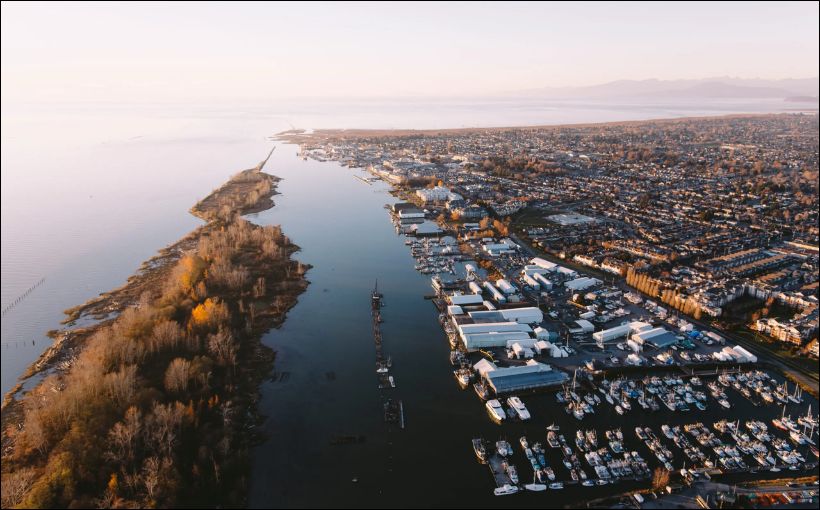
Pictured: Richmond, B.C.
Photo: Tourism Richmond