
 Canada
Canada CRE News In Your Inbox.
Sign up for Connect emails to stay informed with CRE stories that are 150 words or less.


Banking Regulator Frees Up More Capital for Development Projects
The Office of the Superintendent of Financial Institutions (OSFI) has lowered the Domestic Stability Buffer (DSB) for Canada’s six largest banks to 3% from 3.5%, a move aimed at allowing the country’s biggest lenders to deploy more capital in support of economic growth and investment.
Canada’s Big Banks are expected to free up more capital for loans related to infrastructure and conventional real estate development projects. The move comes at a time when Prime Minister Mark Carney’s government has dedicated billions off dollars to infrastructure development projects that also require private-sector investment. Meanwhile, data-centre and enery developers are seeking to install and expand more facilities across the couintry.
The change, which took effect Friday, is the first adjustment to the DSB since June 2023. OSFI also reduced the DSB’s range to 0% to 3% from 0% to 4%, reflecting what it described as the sustained strength and resilience of Canada’s domestic systemically important banks.
OSFI said the changes will give banks greater flexibility to invest in areas critical to Canada’s economic adaptation, including defence and security, critical infrastructure, natural resources and AI.
“By lowering both the level and top end of the range of the Domestic Stability Buffer, OSFI will enable the banking sector to deploy its excess capital in support of Canada’s economic adaptation to new opportunities,” said Peter Routledge, superintendent of financial institutions. “These decisions are consistent with our risk-based, proactive approach to managing capital buffers for Canada’s systemically important banks. We anticipate Canada’s largest banks will use this capital release to invest in Canada’s economy through this period of structural change.”
Canada’s six largest banks currently maintain Common Equity Tier 1 (CET1) capital ratios averaging 13.5%, well above OSFI’s new supervisory expectation of 11%. According to the regulator, that excess capital cushion represents roughly $74 billion, or enough capacity to support an additional $673 billion in risk-weighted assets.
OSFI reviews the DSB twice annually, in June and December, and may adjust it at any time if conditions warrant. The regulator said its decisions are based on a range of indicators, stress-testing results and supervisory judgment.
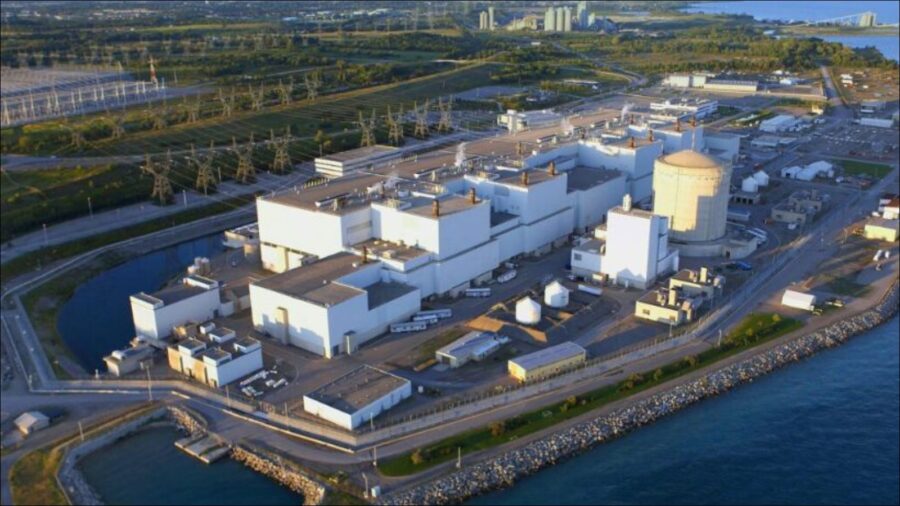
Pictured: The future Darlington New Nuclear Project in Clarington, Ont.
Rendering: OPG
Canada’s commercial real estate market is evolving fast—be in the room where it all comes together. On June 25 in Toronto, Connect CRE Canada brings together the leaders actively shaping the market. Join an influential audience of 200 investors, developers, brokers, lenders, and owners for high-level networking and timely discussions on the trends impacting today’s market. Hear from leaders at TD Asset Management, Fiera Real Estate, Starlight, Woodbourne Capital Management, REMAX, Fengate Asset Management, Stonebridge Financial, Yardi, and more. Register today to stay ahead of the market and build valuable industry connections.
- ◦Development
- ◦Financing