
 Canada
Canada CRE News In Your Inbox.
Sign up for Connect emails to stay informed with CRE stories that are 150 words or less.


Canada’s New EV Deal With China Will Hurt Ontario Auto Plants: Premier
Canada’s sharp reduction of tariffs covering Chinese-made EVs will undercut Ontario’s auto sector and could close vehicles made in this country to the American market, says the province’s premier.
Doug Ford blasted Prime Minister Mark Carney for striking a new EV-trade deal with Beijing.
Under the deal announced Friday, Canada will reduce tariffs on Chinese EVs to 6.1% from 100% for the first 49,000 vehicles imported each year, a quota that will rise annually. The move reverses the protection introduced in 2024, which had aligned Canada with the U.S. in imposing steep duties on Chinese EVs.
Ford contended that the change gives Chinese manufacturers a significant opening into the Canadian market and threatens domestic auto production concentrated in Ontario, home to major assembly plants and parts suppliers.
“Make no mistake: China now has a foothold in the Canadian market and will use it to their full advantage at the expense of Canadian workers,” Ford said in a statement.
He argued that the revised tariff regime will allow lower-cost Chinese vehicles to flood the market, putting pressure on Canadian and North American automakers already navigating the transition to EVs.
“This lopsided deal risks closing the door on Canadian automakers to the American market, our largest export destination, which would hurt our economy and lead to job losses,” he said.
Speaking to reporters in Toronto, Ford said the federal government moved ahead without consulting Ontario and warned the decision could strain Canada’s relationship with the United States, which continues to maintain high barriers against Chinese EVs.
“It’s a terrible, terrible miscalculated decision,” he told reporters.
Ford also raised concerns about the potential reaction from U.S. President Donald Trump, who has called for U.S. automakers to locate more plans in the country.
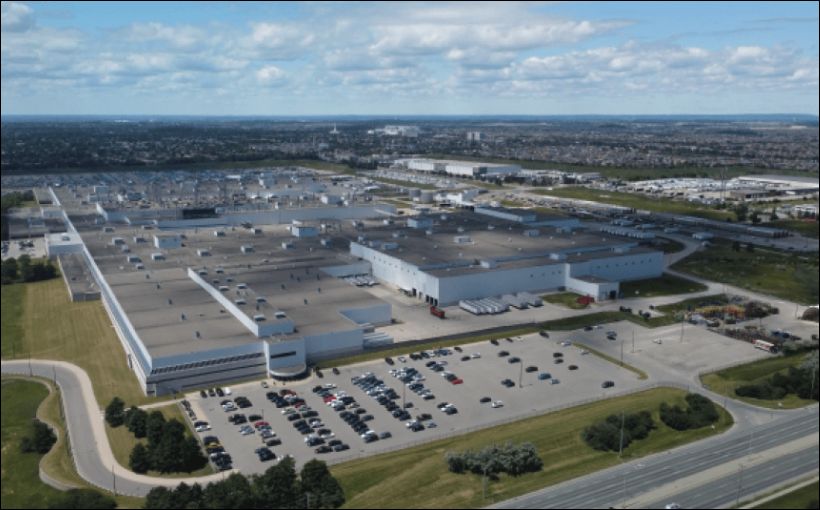
The Canada-China EV agreement comes after the country grappled with temporary and permanent conventional-auto plant closures in 2025 and fears more this year. In one of the more notable happenings, Stellantis relocated all Jeep Compass production to the U.S. from its Brampton, Ont., plant, which has been closed for retooling since 2023.
Canada also battled EV makers’ decisions to scrap and delay vehicle and battery plants in 2025.
The Ontario premier also expressed concerns about the make-up of a Chinese EV slated to come into Canada, calling them it a “spy car.”
“I don’t trust what the Chinese put in these cars,” he told reporters.
But Carney, in Beijing on a trade mission that led to the deal, countered that Chinese EV-vehicle and parts manufacturers will open plants in Canada.
Meanwhile, Unifor also slammed Carney for signing the deal with Beijing.
“This is a self-inflicted wound to an already injured Canadian auto industry,” said Lana Payne, the union’s national president. “Providing a foothold to cheap Chinese EVs, backed by massive state subsidies, overproduction and designed to expand market share through exports, puts Canadian auto jobs at risk while rewarding, labour violations and unfair trade practices.”
Unfor represents thousands of Canadian autoworkers and has long warned that letting Chinese EVs into Canada would flood the North American sector.
“If left unchecked, it would cost Canadian jobs, stall domestic investment, and drive more imports from low-cost jurisdictions,” said the labour organization. “With virtually no Canadian content in Chinese vehicles, our independent auto parts supply chain would also be hard hit.”
The union noted that Chinese EV imports have quickly gained market share in the European Union, Brazil and other markets. The reduced tariff risks turning Canada into a “dumping ground” for Chinese-owned companies at the expense o Canada’s auto sector and its workers, Unifor contended.
The union also argued that the deal comes at a time when Canada’s auto industry is already facing a crisis, hit by U.S. tariffs on Canadian vehicles and rollbacks to U.S. EV policies. Unifor said more than one-third of its members at Detroit Three facilities are currently laid off as several plants sit idle.
“Finding a resolution to U.S. auto tariffs just got more difficult as Canada has surrendered the leverage of opening our market to China,” said Payne.
Pictured: Stellantis auto plant in Brampton, Ont.
Photo: Unifor
- ◦Development
- ◦Economy
- ◦Policy/Gov't