
 Canada
Canada CRE News In Your Inbox.
Sign up for Connect emails to stay informed with CRE stories that are 150 words or less.

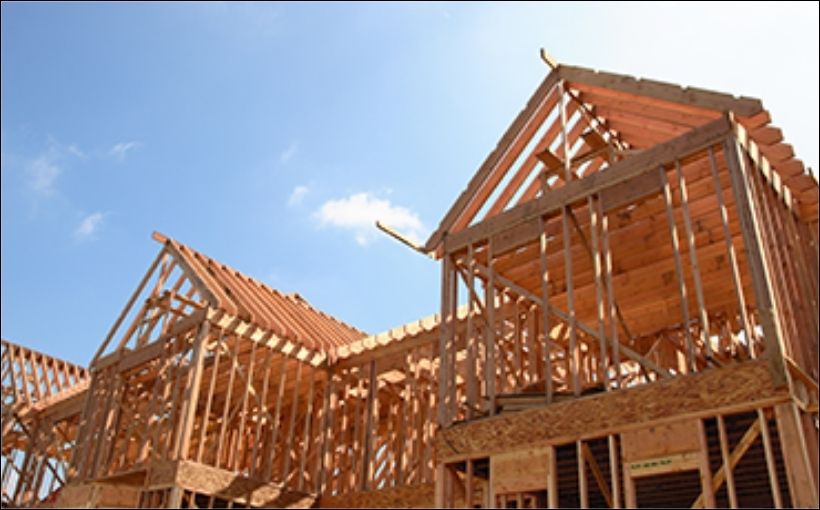

Canadian Housing Starts Continue to Slow Down
Canadian housing starts were flat in January as they continued to slow down.
Actual housing starts in large markets with populations of 10,000 or more rose a marginal 1% year-over-year to 16,088 units from 15,957 a year earlier, according to Canada Mortgage and Housing Corporation (CMHC).
The six-month trend in housing starts decreased 3.5% in January to 254,794 units The trend measure is a six-month moving average of the seasonally adjusted annual rate (SAAR) of total housing starts for all areas in Canada.
The total monthly SAAR of housing starts for all areas in Canada fell 15% in January to 238,049 units, more than offsetting December’s increase to 280,668 units. CMHC said the decline highlights the volatility of month-over-month starts figures and the caution with which they should be interpreted.
“While actual starts in January were flat, the six-month trend has decreased for the fourth consecutive month, which is in line with recent signs of slowing momentum in residential construction,” said Tania Bourassa-Ochoa, a CMHC deputy chief economist.
“We expect new construction to continue trending lower going forward as trade and geopolitical uncertainty, high construction costs, weaker demand, and rising inventories continue to constrain developer activity. As a result, near-term improvements in housing supply are unlikely, reflecting the on-the-ground sentiments we’ve heard from developers over the past several months.”
Bourassa-Ochoa’s comments reflected ongoing warnings issued by CMHC in recent months in conjunction with its monthly housing-starts updates.
Among Canada’s three largest cities, Vancouver recorded a 37% increase in actual starts due to higher multi-unit and single-detached construction, while Toronto saw a 2% decline because of lower single-detached starts. Montreal posted a 44% year-over-year decrease, driven by lower multi-unit and single-detached activity.
CMHC said it uses the trend measure to complement the monthly SAAR data in order to smooth out considerable swings in monthly estimates and provide a clearer picture of upcoming new housing supply.
The January findings come after CMHC reported that actual housing starts in Canada’s large population centres rose 25% year over year in December and finished 2025 up 6% compared with 2024.
Photo: TD Economics
- ◦Development