
 Canada
Canada CRE News In Your Inbox.
Sign up for Connect emails to stay informed with CRE stories that are 150 words or less.

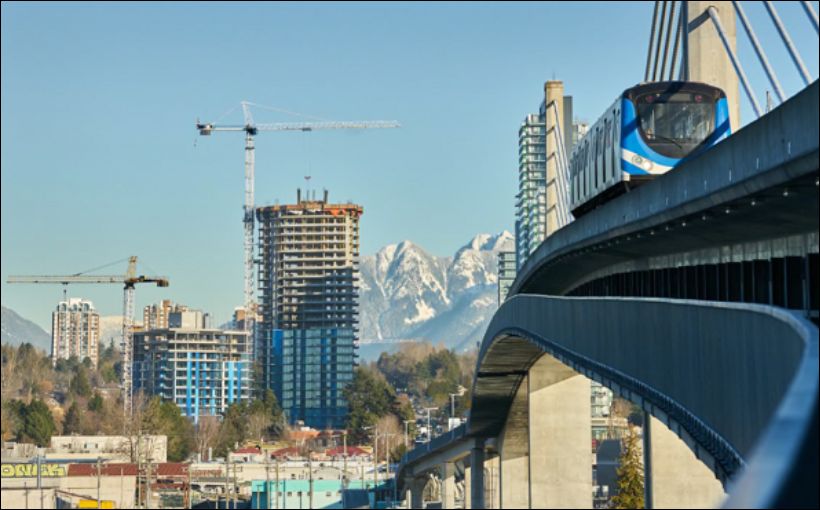

Carney Budget Proposes $50B Local Infra Fund
Prime Minister Paul Carney’s first budget did not contain many surprises when it was introduced Tuesday.
But Finance Minister François-Philippe Champagne still unveiled a notable one.
The finance package includes a proposed $50-billion Local Infrastructure Fund, which will include money for housing, transportation and healthcare-related infrastructure projects. But the proposed investment, along with the entire budget, will require support from opposition MPs that the Liberals do not have yet.
As expected, the proposed budget emphasizes large investments as the Carney government seeks to offset the effects of U.S. tariffs on Canada’s weakening economy. The budget includes $141 million in new spending over the next five yars.
“The level of uncertainty is higher than what we have seen and felt for generations,” Champagne said in his budget speech in the House of Commons “Bold and swift action is needed. To weather the storm of uncertainty, we will not lower our sails, that would be un-Canadian. Quite the opposite. We will raise them — to catch the winds of economic change.”
The Carney government tabled the proposed budget in the House. Because the Liberals have a minority government, the plan will require full or partial approval from at least one other party. According to political convention, MPs are required to toe the party line on a budget vote, rather than being allowed to cast what is known as a conscience vote or, in other words, decide on their own whether to accept or reject it.
If it fails to pass, the government will fall and an election will be called. The Liberals are three votes short of what they need.
Many of the investments were already known. They include include developments led by the new federal Major Project Office and tied to proposed fast-tracked approval legislation; the Build Canada Homes initiative and a boost in defence spending equivalent of 5% of Canadian GDP.
The proposed budget also contains some significant cuts to the federal public service as the government seeks to reduce spending by $56 million over the next five years. The budget projects a reduction of 40,000 public servants from the 2024 peak to 330,000 over the next five years, the Globe reported.
Arguably, the budget marks Carney’s first major test since he replaced Justin Trudeau as prime minister in the spring. A budget vote is automatically considered a confidence vote in the House, and the government will fall if the funding plan is rejected.
An election campaign around the Christmas season would anger voters, a point that the other parties will consider strongly as they cast their votes on the budget. A large government spending increase tied to the infrastructure investments will also receive close scrutiny.
Conservative Leader Pierre Poilievre has declined to say whether his party, the Official Opposition, will support the budget. He had called on Carney’s Liberals to keep the deficit below $42 billion and scrap emission limits on oil and gas facilities, but the projected deficit will be much larger, coming in at $78.3 million this fiscal year and dropping to $56.6 billion by 2029-30, according to The Globe and Mail.
NDP Interim Leader Don Davies has stated that his party will take a wait-and-see approach before determining how it will vote. Davies told reporters that the party could abstain from voting.
Bloc Quebecois Leader Yves-Francois Blanchet has stated that his party is unlikely to support the budget unless the government meets its demands, which include increasing old-age security payments and health-transfer funding allocations to the province.
Carney could also win support for the budget if a sufficient number of opposition MPs are absent when the vote is held.
Accordingly, all Liberal MPs must be present to help ensure that the budget passes.
Pictured: SkyTrain and other infrastructure in Greater Vancouver.
Photo: Statistics Canada
- ◦Development
- ◦Financing
- ◦Economy
- ◦Policy/Gov't