
 Canada
Canada CRE News In Your Inbox.
Sign up for Connect emails to stay informed with CRE stories that are 150 words or less.

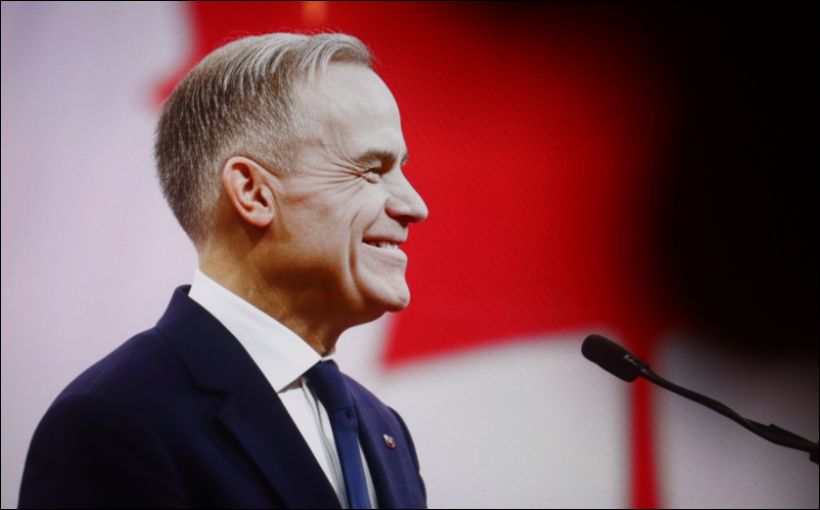

Carney’s Retaliatory Tariffs Shift Draws Criticism, Praise
Labour and small-business groups are panning and praising Prime Minister Mark Carney’s decision to ease retaliatory tariffs against imports from the U.S.
The shift takes effect September 1 and could have widespread implications for Canadian commercial real estate.
Unifor, Canada’s largest union, slammed Carney’s revised stance.
Unfor said “the move the move undermines Canadian workers and weakens Canada’s bargaining position in an escalating trade war,” giving U.S. President Donald Trump a clear advantage.
“Donald Trump’s attacks on Canada’s auto, steel, aluminum and forestry sectors are hitting workers in real time,” said Unifor National President Lana Payne. “Walking back counter-tariffs is not an olive branch—it’s an open invitation for more U.S. aggression. It sends the wrong signal at the worst possible moment.”
Unifor has argued that Canada must use its trade leverage to protect Canadian jobs.
But the Canadian Federation of Independent Business welcomed Carney’s policy shift.
“This is a step in the right direction and will take some of the pressure off Canadian small businesses as trade talks continue,” Corinne Pohlmann, the group’s executive vice-president of advocacy, said in a statement.
CFIB members have told the group’s leaders that retaliatory tariffs were almost as damaging as the U.S. tariffs themselves.
Nearly six in 10 small firms reported that they were hurt by Canada’s counter-tariffs, with only steel and aluminum tariffs doing more harm. CFIB members were in favour of counter-tariffs as the trade war began but have since shifted their position.
Prime Minister Mark Carney said Canada will ease its retaliatory trade stance by removing tariffs on U.S. goods covered under the Canada-United States-Mexico Agreement (CUSMA).
The shift restores tariff-free trade for more than 85% of Canada-U.S. goods but keeps duties on steel, aluminum and autos as Ottawa and Washington continue sector-specific negotiations.
Carney framed the move as preserving Canada’s “unique advantage” under CUSMA, noting that Canadian exports face an average U.S. tariff rate of 5.6%, the lowest of any U.S. trading partner.
“There is a time in a game … when you go hard in the corners, your elbows up,” Carney told reporters, using a hockey analogy.
Reaction to the announcement was mixed. Business groups welcomed the easing of costs on cross-border trade, while union leaders cautioned that removing tariffs too soon could weaken Canada’s leverage in negotiations on strategic industries.
“But there’s also a time ina game where you want the puck, you want to stick handle, you want to pass and want to put the puck in the net. And we’re moving later into the game. We’re at that time of the game.”
Carney also confirmed that Canada will launch consultations next month ahead of the 2026 CUSMA review, while preparing a new industrial strategy aimed at protecting jobs, boosting competitiveness and diversifying exports. He said additional initiatives will include accelerating homebuilding, strengthening defence partnerships and investing in nation-building projects.
The announcement comes as the United States has sharply raised global tariff levels, with the average U.S. tariff rate climbing from just over 2% last year to nearly 16% today—fuelled by sectoral measures in steel, autos, and other strategic industries, he noted.
Carney’s shift came after he and Trump held their first phone conversation in months. The two countries missed their August 1 deadline for negotiating a new trade deal.
Pictured: Prime Minister Mark Carney
Photo: Shutterstock
- ◦Financing
- ◦Economy
- ◦Policy/Gov't