
 Canada
Canada CRE News In Your Inbox.
Sign up for Connect emails to stay informed with CRE stories that are 150 words or less.

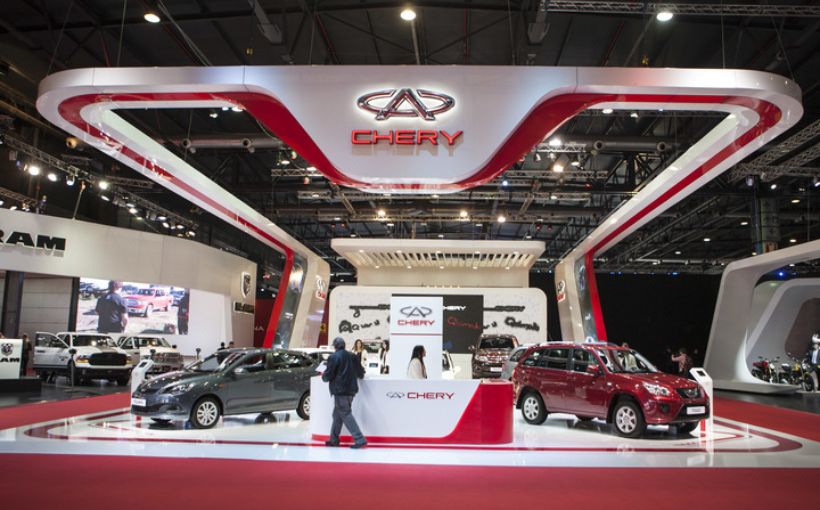

Chinese EV Maker Chery Preparing to Expand into Canada
Chinese EV manufacturer and retailer Chery is taking early steps toward a Canadian market entry, The Globe and Mail reported.
The effort signals a potential shift in the country’s auto landscape as Ottawa restrictions on EV imports from China. As part of an EV-trade deal with China, Prime Minister Mark Carney recently lowered Chinese EV tariffs to 6.1% from 100%. A total of 49,000 Chinese EVs per year will be allowed into Canada with the number rising over the next five years.
The current 49,000 yearly limit is a fraction of the millions of EVs, hybrids and gasoline-powered vehicles allowed imported into Canada annually from the U.S.
“It is expected that within three years, this agreement will drive considerable new Chinese joint-venture investment in Canada with trusted partners to protect and create new auto manufacturing careers for Canadian workers and ensure a robust build-out of Canada’s EV supply chain,” the Prime Minister’s Office said in a recent statement.
People familiar with Chery’s plans told the Globe that recruiters linked to company have been quietly approaching Canadian auto-industry executives about senior roles, indicating the company is laying the groundwork for a local operation. Chery also plans to open a Toronto-area office and a full sales and launch a distribution platform that could include the Omoda and Jaecoo brands, according to the Globe.
The Canada-Chinese EV-trade deal has raised questions about how U.S. President Donald Trump will react to it as the reopening of the Canada-U.S.-Mexico-Agreement approaches later this year. Trump initially praised the Canada-China EV agreement, saying that Carney had to make it, but then appeared to backtrack, warning that the U.S. would impose 100% tariffs on all imports from Canada if Carney signs a free-trade deal with Beijing.
Carney countered by saying that Canada has no plans to sign such an agreement with China.
The prospect of new Chinese electric vehicles entering Canada has drawn criticism from domestic auto interests and Ontario Premier Doug Ford, who argue the policy shift could undermine local production. Ford has also contended that the lower tarriffs will hamper Canada when it comes to renegotiating CISMS.Unifor has also backed at the Canada-China EV-trade deal and lower tariffs.move.
Andrew King, managing partner of DesRosiers Automotive Consultants, told the Globe that global automakers already manufacturing in China may benefit first, while new entrants such as Chery appear to be positioning for longer-term growth rather than immediate sales. According to King, the car companies that will benefit from the lower tariffs in the short term include Tesla and Volvo. Both automakers could avoid having to pay
King told the Globe that Tesla could export its Model 3 directly from Shanghai to Canada, avoiding a 25% tariff covering the U.S.-made version of the vehicle. Volvo, which has a Chinese parent, could do likely with its EX30 and Polestar 2.
The two Volvo models were exported to Canada from China before former prime minister Justin Trudea’s government imposed 100% tariffs on Chinese EVs in accordance with then-U.S. president Joe Biden’s policy.
In an interview with the Globe, Shahin Alizadeh, CEO of Downtown Auto Group, the owner of several Toronto car dealerships, criticized Carney for not providing more information on the new Chinese EV-import policy.
Photo: Chery