
 Canada
Canada CRE News In Your Inbox.
Sign up for Connect emails to stay informed with CRE stories that are 150 words or less.

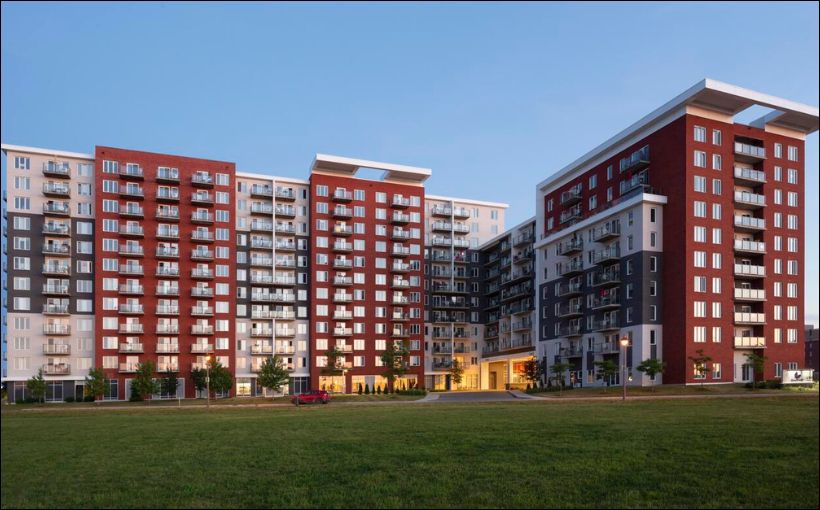

Distressed Condo Projects Likely to Become Seniors Residences
A number of stalled or distressed Canadian condominium projects are poised to be converted into retirement homes amid strong ongoing demand for the asset class, says a leading seniors-housing expert.
“There’s a high likelihood of that,” said Sean McCrorie, Cushman & Wakefield’s the firm’s vice-chair and seniors housing and healthcare practice group leader, told Connect in an interview. “We’re having those discussions.”
McCrorie made the comments in the wake of the firm’s latest Canadian seniors-housing market overview. Cushman & Wakefield reported that Canada’s seniors housing sector is set for a record year in 2026, driven by accelerating demand, constrained supply and sustained income growth, according to Cushman & Wakefield’s latest Seniors Housing Market Overview report.
As a result, the company anticipates that a long-awaited new-construction development cycle will begin this year.
“We’re, we’re doing a lot of education with some of those groups [interested in converting planned condo projects into seniors residences] just to help them understand this asset class,” said McCrorie.
“Of course, there is that accommodation and residential component, so they’re already up the learning curve from the sense that they’ve built residential complexes in the past.
Cushman & Wakefield is doing “a lot of educating” with groups interested in converting slow-selling condo towers into seniors homes “to help them understand the asset class,” said McCrorie. “It’s just really incorporating those nuances or those unique elements that make a seniors housing community a retirement home as opposed to an apartment building. So, I do think that could be something that we start to see more of.”
To move further along the learning curve, investors and developers need to better understand seniors housing’s operating component, he added. A seniors-housing development is a “very interesting” confluence of an apartment building, a hospitality component and a healthcare use.
“And, certainly, apartment or condo developers would be familiar with the residential component there,” he said. “But layering on that hospitality piece, which would entail upwards of 30%, 40% of your total gross floor area as common-area amenity space for things like congregate dining or resident amenity areas.
“From a design perspective, you would need to factor that in, because seniors housing properties are so much more than just a place to live. It really requires thought to some of those other design elements that will help it perform as a retirement community.”
In the case of a struggling condo project that has not be built yet, the developer would have “artistic license” to build either an independent-living or assisted living project because the required amenity and medical-needs areas could be adapted more easily.
“If the building has already been constructed, you are going to be quite limited by the built form that you constructed, which of course was designed to be maybe a condo project which would not have the common-area spaces that would be required to function as a retirement home,” said McCrorie.
An assisted-living property would require “quite a bit of functional design” for its type of healthcare use.
As a result, he said, there will be a greater opportunity to convert a condo project that’s in the raw-land stage into seniors housing.
“We think there’s going to be quite a bit of user demand for that,” said McCrorie.
Having largely recovered from pandemic-related disruption, the seniors-housing sector’s fundamentals suggest it is well-positioned to outperform other commercial real estate asset classes as structural tailwinds strengthen in the year ahead, according to the Cushman & Wakefield report. Capital-markets activity reflects the improved outlook, with investors allocating increasing amounts of capital to seniors housing in recognition of its long-term growth potential.
National occupancy reached 93% at year-end 2025, up roughly 3.5 percentage points from the previous year, and is on pace to hit 95% by the end of 2026
McCrorie expects the anticipated new-construction cycle to start in core primary markets with development expanding to other markets over about the next five years.
“I think there’s going to be a fairly comprehensive increase in development activity right across the country,” he said.
Photo: Courtesy of Cushman & Wakefield
- ◦Lease
- ◦Sale/Acquisition
- ◦Development