
 Canada
Canada CRE News In Your Inbox.
Sign up for Connect emails to stay informed with CRE stories that are 150 words or less.


Pivot to Purpose-Built Rental Poses Difficulties for Condo Developers
As the condominium market continues to stall, many Canadian developers are shifting their focus toward purpose-built rental housing.
However, industry insiders caution that this pivot is far from straightforward, especially for those lacking experience in the rental sector.
The primary motivation for this shift is necessity as presales slow. Many condo projects are no longer financially viable, including a number on which on which development is already well underway.
As a result, many strata-residential developments are no longer financially viable, and developers are seeking alternatives.
But the economics of rental development present new and formidable challenges. Rising construction and land costs, in addition to increasing government fees and taxes, have created a financially burdensome environment. Unlike condominium developments, which offer quick returns upon unit sales, rental properties require long-term capital investment and delayed profitability.
“I’d say a lot of groups are looking at converting to rental out of necessity because their condo projects are not viable,” Derick Fluker, chief investment officer at Wesgroup Properties told The Globe and Mail.
“It’s the least-bad option.”
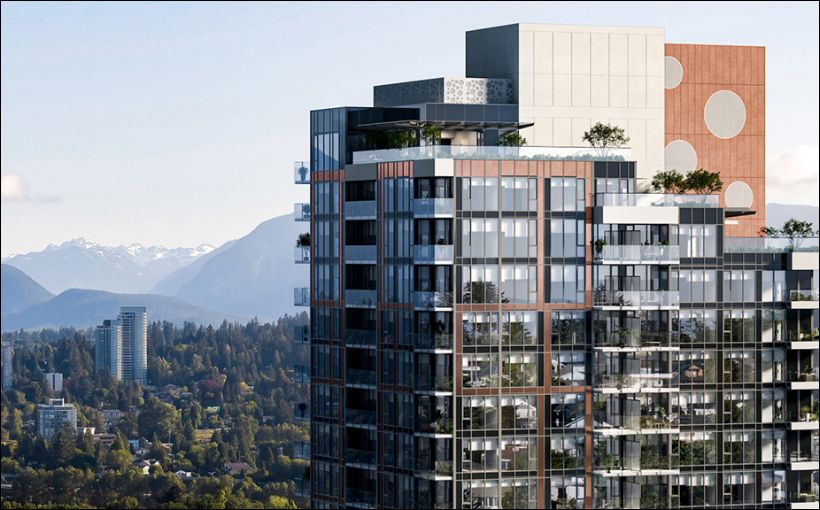
In 2024, Wesgroup opted to convert the originally proposed Nelson condominium project in New Westminster, B.C., into 294 rental suites.
In interviews with the Globe, developers who specialize in purpose-built rentals note the substantial difference in financing and construction strategies. Condo builders typically repay loans through unit sales, while rental developers often retain ownership and must secure long-term refinancing—frequently through government-backed programs such as the Canada Mortgage Corporation’s MHC’s MLI Select program. Yet, these programs come with strict conditions and funding limits.
The financial strain is being exacerbated by what Fluker called a “cost-of-delivery crisis.”
Construction expenses have ballooned beyond what market rents can support, squeezing profit margins to the point of unsustainability.
While material costs have stabilized somewhat in 2024, municipal fees have continued to rise. A recent study found that high-rise development fees in Toronto now average $134,900 per unit, the highest in Canada.
“There’s a lot of guys who are now looking at rental as a pivot given their circumstances,” said Oren Turkienicz, vice-president of acquisitions for Pinemount Developments, which specializes in purpose-built rental, told the Globe.
“Expansion to that market for people who are just trying it out could lead to potentially poor results – the returns aren’t going to be the same.”
To survive, developers must adopt innovative construction methods, the Globe noted, echoing a sentiment that is increasingly being aired. Prefabricated components and mid-rise buildings with surface parking are among the cost-saving strategies being employed.
Despite successful projects in secondary markets, the pace of rental housing delivery remains sluggish compared to demand. In the Greater Toronto and Hamilton Area, about 126,000 rental units are in the planning stage, but only a fraction are near completion, according to the Globe.
Political leaders have proposed various strategies to spur construction. Conservative leader Pierre Poilievre advocates for withholding federal funds from municipalities that fail to boost housing starts, while Liberal leader Mark Carney proposes a national home-building agency. However, developers argue that consistent, long-term policy is more critical than short-term fixes.
Industry leaders have called for systemic changes in financing, policy stability, and streamlined approval processes. Without these, the transition from condo to rental development may prove too costly for many to sustain, according to the Globe.
Pictured: Wesgroup’s Nelson project in New Westminster, which was converted to a purpose-built rental development from condominiums.
Image: Wesgroup
Join Canada’s leading CRE owners, investors, developers, brokers, financiers, and more at Connect Canada on May 28 at Malaparte in Toronto. Register now to catch forecasts from Canadian CRE leaders on market challenges and opportunities, insights into international investing with evolving market dynamics, the outlook for multifamily housing, and much more. www.ConnectCanada2025.com
- ◦Lease
- ◦Sale/Acquisition
- ◦Development
- ◦Financing
- ◦Policy/Gov't