
 Canada
Canada CRE News In Your Inbox.
Sign up for Connect emails to stay informed with CRE stories that are 150 words or less.

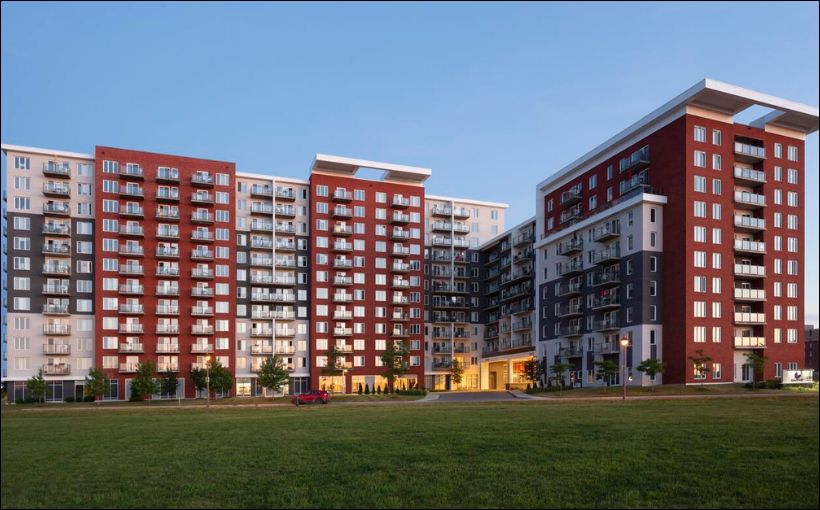

Seniors Housing Market Facing Future Supply-Demand ‘Pressure Cooker’
Canadian seniors housing supply will not meet demand for new construction over the next decade, says a Cushman & Wakefield executive who specializes in the asset class.
Sean McCrorie, head of the company’s seniors housing and healthcare valuation and advisory services group, made the comment in an interview with Connect.
A new Cushman & Wakefield report says that demand is expected to accelerate as Canada’s over-80 population increases 4.8% annually between 2025 and 2042. Some 200,000 new seniors housing suites will be required over the next decade to maintain market equilibrium.
“We think the reality is the sector’s not going to be able to mobilize at this stage to deliver all of those units, and then, as a result, you’re going to have outsized demand relative to your supply,” said McCrorie. “That’s really going to further drive vacancies down [and] occupancies up.
“And, it forms a little bit of a pressure-cooker situation.”
Cushman expects pre-pandemic occupancy levels to return in 2025, setting the stage for ongoing demand increases. That bodes well for future operating fundamentals but leaves developers grappling with stagnant, or even shrinking supply, said McCrorie.
In the past decade, fewer than 73,000 suites were built, according to the report that he co-authored with colleagues Heather Payne and Austin Lennard.
A lack of skilled-trades labour, including drywallers, electricians, and concrete and steel workers, together with a lack of financing and limited land availability, will make it “very hard” to construct the amount of supply needed. The previously constructed 73,000 were built before interest rates increased considerably and at time when units cost 50% to 100% less to build. Rents were also lower.
“It is a fairly high barrier to entry for developers to mobilize and justify new development,” McCrorie said.
While that situation causes frustration for developers, it provides a “silver lining” for established seniors-residence owners.
“If you already are an incumbent and have seniors housing projects, it’s really to your benefit, because you’re not seeing a tonne of new competition,” said McCrorie. “As a result, you can grow rents at a rate prospectively that’s likely going to be at a greater rate than what you’ve been able to grow them at historically.”
Per-unit construction costs vary greatly due to asset class and location. A mid-market model seniors residence in Toronto will cost $600,000 to $800,000 per suite. Meanwhile, some high-end buildings in Toronto and Vancouver cost as must as $1 million per unit to build.
For developers to get closer to the 200,000-unit target, said McCrorie, governments will have to provide incentives that cater to baby boomers the way programs did in previous decades.
“The baby boomers have commanded an outsized share of society’s resources since they were born post-World War II,” he said. “The veterans came home, they had kids, and within five [or] six years, municipalities and provincial governments were having to expand the education system. They had to build elementary schools.
“And then through the ’60s, they were building more high schools. And then later, in the ’70s, it was more universities. And through the ’80s and ’90s, in the last 20 years, they’ve been building more hospital capacity.
“Well, what’s next, in that ripple effect of this outsized share of resources that the boomers have, really, by virtue of just sheer numbers commanded is this required expansion in seniors housing. So the demand opportunity is absolutely there. It’s based on the demographics.”
But there is less certainty surrounding developers’ ability to devise the proper model to meet supply. The situation is similar to what is happening with the rental-housing shortage, he added.
Developers can not build new product quickly enough. As a result, seniors housing rents will steadily rise.
“Unless developers can find a model where they can build more [seniors housing on] a more efficient cost basis, then I think this is the reality that we expect to see,” he said.
As with the multi-family sector, seniors housing projects are eligible for Canada Mortgage and Housing Corporation financing, and they receive G.S.T. and harmonized sales-tax exemptions for construction materials, he noted.
But seniors housing developers face additional costs when it comes to offering healthcare-related services like medication administration and memory care in facilities.
“It’s yet to be seen, but I think governments could have a potential role to play, to subsidize residents and make it a little bit more affordable for them and, as a result, maybe help the feasibility for new construction as well,” said McCrorie.
As with the multi-family housing shortage, many parties will have to work together to offset the seniors housing supply-demand imbalance.
“Likely, it’s going to require great collaboration between federal stakeholders, provincial, municipal and private developers, as well as a public-private partnership in order to make this work,” said McCrorie.
- ◦Lease
- ◦Sale/Acquisition
- ◦Development