
 Canada
Canada CRE News In Your Inbox.
Sign up for Connect emails to stay informed with CRE stories that are 150 words or less.


Smart-Building Technologies Will Be Critical to Data Centres’ Success
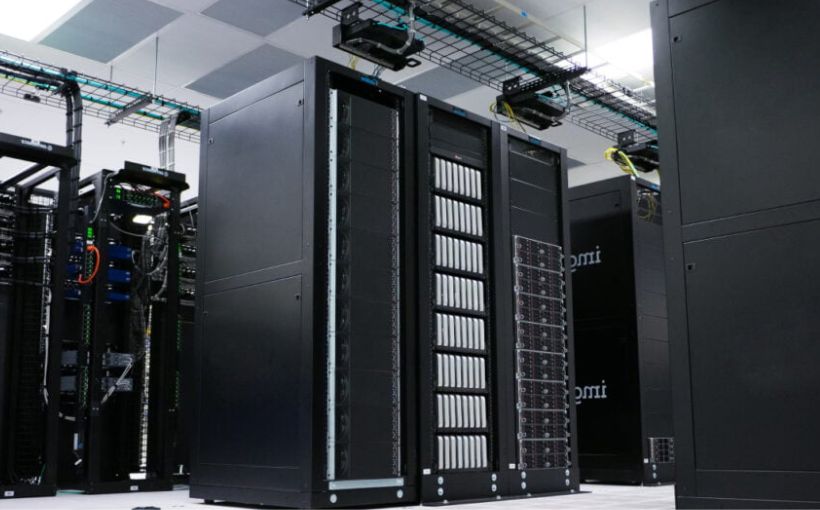
Smart-building technologies will be critical to the success and sustainability of modern data centres in coming years as their scale and energy demands rival those of entire urban districts, says a Siemens leader.
Peter Lukacko, vice-president of Smart Infrastructure at Siemens, said data centres present a fundamentally different challenge compared with traditional commercial buildings, requiring advanced systems to manage enormous and complex energy loads.
“Data centes bring a new challenge… where a data centre can take as much load as city blocks, or in some cases, even small cities,” Lukacko said in an interview. “So this is where smart building becomes even more critical from a data-centre perspective.”
Lukacko emphasized that smart-building systems are no longer confined to a single structure, but must extend beyond facility walls to integrate with broader energy infrastructure. This includes microgrids, electrical-distribution networks and even connections across multiple data centres and industrial sites.
At the core of this evolution is the need to ensure uptime, optimize performance and control energy consumption—three factors that are vital to data-centre operators.
“The operational performance systems and the data available within that smart building become critical to make sure the uptime is there, that the operations are effective, that the energy consumption is managed,” Lukacko said.
He noted that modern smart-building platforms enable facilities to communicate with surrounding infrastructure, including utilities and distributed energy resources, allowing for more co-ordinated and efficient power usage across regions.
The growing importance of these technologies comes as demand for data centres accelerates, driven by digital services and artificial-intelligence workloads. At the same time, operators are under pressure to improve efficiency and reduce environmental impact.
Lukacko said both new and existing data centres can benefit from smart-building solutions. Advances in Internet of Things sensors, cloud computing and analytics have significantly reduced the cost and complexity of implementation.
“The cost of burden of entry now for IoT sensors and devices and the rapid advancement of the AI and analytics… make these use cases really affordable,” he said. “It is definitely possible” to retrofit older facilities.
He added that smart-building technologies can deliver measurable business benefits, including significant energy savings and operational improvements.
“Things like having smart buildings can drive 30% to 50% energy savings in a building,” Lukacko said. “If you use enhanced fault detection and diagnostics and analytics… you can see 20% to 30% [more] productivity in your operations.”
Beyond efficiency, he said, these systems also help optimize space usage and improve user experience, contributing to stronger overall performance.
Lukacko said interest from building owners and operators has grown sharply in recent years, driven by lower technology costs, improved capabilities and changing user expectations.
“More than ever, we’re getting questions about how do we unlock this,” he said.
He added that a shift toward open, interoperable systems is also accelerating adoption, allowing different technologies to communicate and generate actionable insights.
Looking ahead, Lukacko expects strong growth in demand for smart-building solutions, particularly as data-centre development continues to expand.
“What the market data shows is that this will be a significant growth in business, in the commercial real estate and general-building sector over the next two to three years,” he said.
- ◦Development